Whoa! I’ve been poking around Solana explorers a lot lately. Early impressions leaned toward speed, simple UI, and gaps. Initially I thought all explorers were roughly the same, but then I dug deeper and saw real differences in data fidelity, UX choices, and NFT tooling. This matters if you track NFTs or on-chain activity.
Seriously? Take NFT tracking as an example—it’s where explorers reveal differences. Some platforms lag on metadata updates or misattribute mints, somethin’ I noticed early. On Solana the chain produces a flood of transactions per second, so an explorer’s indexing strategy really shapes what you can trust in real time versus what updates later. If you’re watching for rug pulls or duplicate mints, timing is everything.
Hmm… I’ve been using a few different tools, and my habits shifted. One explorer prioritizes raw RPC data while another layers parsed events and human labels. Initially I thought raw proofs were always superior, but then I realized that human curation and event parsing can reduce noise and surface the signal you actually care about for NFTs and transfers. On balance I started toggling between both approaches depending on the task.
Here’s the thing. solscan has been a steady presence in my workflow. It surfaces token ownership, transaction history, and program logs concisely. When I’m investigating an NFT drop I want mint addresses, creators, and marketplace activity within a minute, and that kind of responsiveness is where indexing and caching choices become visible. That said, no tool is perfect for every edge case.
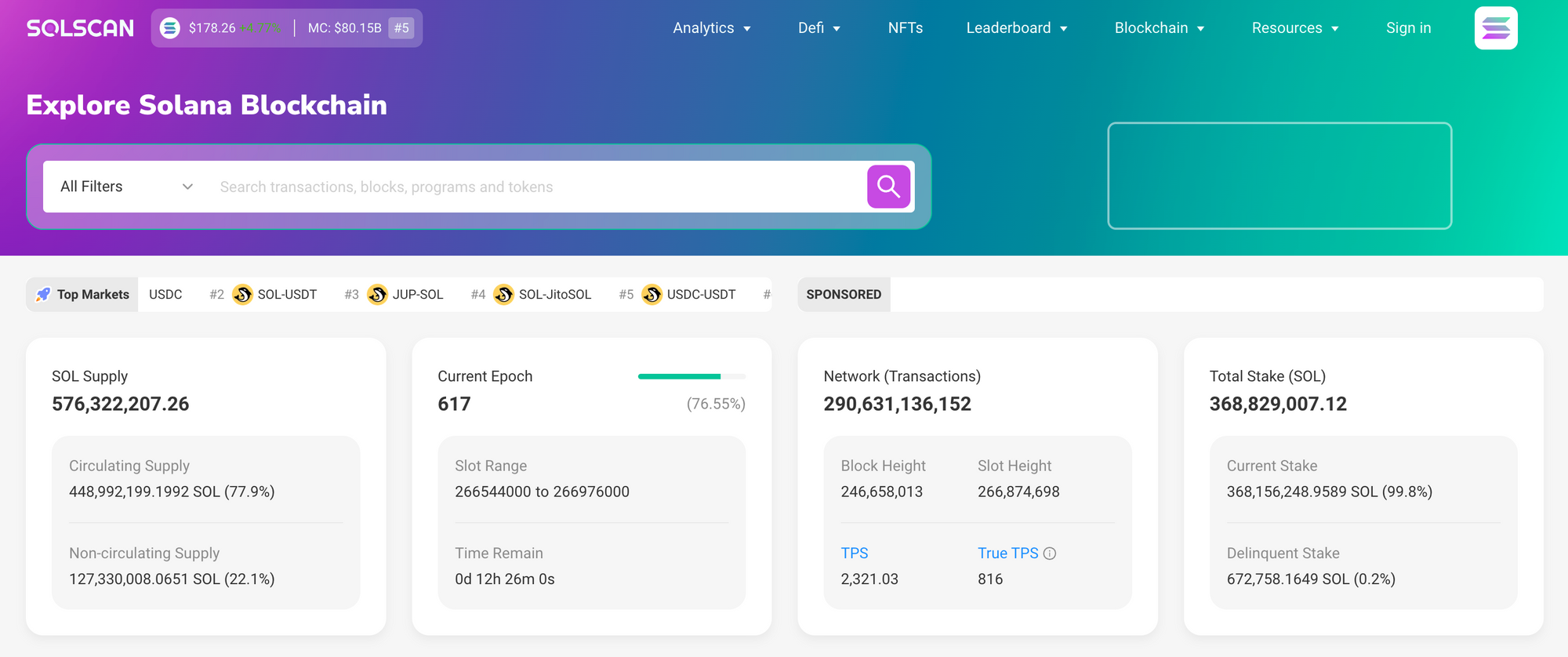
Why I keep coming back to solscan
It combines quick indexing with readable interfaces, which feels rare. The API is straightforward enough that you can script alerts, and their parsed events often match what I see in raw logs. For collectors, creators, and security folks that blend of speed and clarity is huge. I’m biased, but the tradeoffs here tilt toward practical visibility.
Whoa! Sometimes explorers show phantom balances or missing tokens after airdrops. My instinct said something felt off about certain snapshots during heavy traffic. Actually, wait—let me rephrase that: network congestion, parallel transactions, and program-specific logic can all conspire to make a single-source explorer misleading if you’re not cross-checking with on-chain logs and raw transaction data. Cross-checking is tedious but extremely important for long-term data confidence.
Really? I still miss a few niche features I used on other chains. Filters for delegated accounts, stake-specific flows, and program event breakdowns help a lot. On Solana, programs like Metaplex or custom smart contracts emit events that are subtle and context-dependent, so a tracker that exposes parsed events alongside raw logs will often save analysis time and prevent mistaken inferences. I’ve flagged several listings that looked weird because the explorer showed incomplete creators’ splits.
Hmm… Privacy and traceability matter too, especially for compliance and incident response (oh, and by the way…). Some teams need exportable CSVs, API keys, or webhooks for near-real-time alerts. If you’re running a marketplace or monitoring smart contracts for security, integrating an explorer’s API into alerts can close the loop and reduce the time between detection and mitigation. That integration work is often nontrivial but pays off during incidents.
I’ll be honest… The UX matters more than I had initially expected, seriously. Clear addresses, copy-to-clipboard, and decoded instructions save precious analyst time. So when I recommend tools I weigh data accuracy, indexing transparency, rate limits, and how friendly the UI is for non-technical collectors because those combined factors decide whether people trust your findings and act on them. There are tradeoffs and gaps to be aware of.
FAQ
How fast is indexing on Solana explorers?
It varies by provider and by load; some update near real-time while others batch processes during congestion, so expect differences during large drops or market events.
Should I rely on one explorer alone?
You can, but I don’t recommend it—use at least one explorer plus raw logs or a second source when verifying mint events, ownership, or suspicious activity.